
Blog de cine y derechos humanos
mayo 9, 2013
Human Rights Film Diary es un blog con comentarios de más de 70 películas y documentales. Me gusta. Lo escribe muy bien Keina Yoshida, que es una candidata a doctora del London School of Economics y hace su investigación sobre la interacción del derecho internacional penal y el cine. Ha elegido sabiamente su tema de investigación Keina Yoshida. Disfruten del blog, y las películas.
Tests de ADN y Derecho internacional
mayo 9, 2013
Buen programa ha montado el profesor Juan Manuel Faramiñán en el Observatorio de la Globalización de la Universidad de Jaén. Van a dedicar una sesión el próximo martes 14 de mayo a estudiar el ADN como instrumento contra el tráfico de menores y el papel de proyectos científicos como el programa DNA-PROKIDS del Laboratorio de Identificación Genética de la Universidad de Granada. La sesión se celebrará de 10.00 a 14.00 horas el martes 14 de mayo de 2013 en el Salón de Grados del Edificio Zabaleta de la Universidad de Jaén.
The 5th Conference of the Journal of Private International Law will take place in Madrid on 12-13 September 2013. The Law Faculties of Universidad Autónoma de Madrid and Universidad Complutense share the organization.
Please note that registration is open until 28th July. The full programme (plenary sessions and panels) is available here. I will not be in Madrid on those days of September, but the plenary session on Global Litigation looks really interesting to us public international lawyers; it includes a paper on private international law in the International Court of Justice and, again, one on the tobacco plain packaging cases. Here is the complete list of papers for that session:
- ‘The benefits of regional and global litigation instruments for foreign trade and investment’ by M. Pertegás and L.E. Teitz.
- ‘Transnational litigation and PIL’ by D.E. Childress.
- ‘A conflict of laws approach to competing rationalities in international law. The Case of Plain Packaging between IP, Trade, Investment and Health’ by H. Grosse Ruse-Kahn.
- ‘Private International Law before the International Court of Justice’ by B. Ubertazzi.
- ‘Countries, States, and Legal Systems: An International Private Law Perspective’ by G. Maher and B. Rodger.
- ‘Corruption in International Commercial Arbitration—Special Conflict of Laws Challenges’ by Z.S. Tang.
It is a P2 level to cover general temporary assistance posts. Applications until 19 May 2013. The information is here.
The conference is organized by the UAM’s LL.M IP&IT and Queen Mary, University of London, on 7 June 2013 at the UAM Faculty of Law. The programme is here. I am particularly interested in the paper by Jonathan Griffiths (Senior Lecturer, QM, Solicitor) on “Trademarks, Tobacco advertising and the right to property”. There is no fee for students and faculty of Spanish public universities. Registration is required.
El viernes 10 de mayo a las 12:00 horas tendremos el gusto de recibir al profesor Nico Krisch en el seminario de profesores de la Facultad de Derecho de la UAM. El profesor Krisch va a presentar (en inglés) su paper «From Consent to Consultation: The Shifting Architecture of International Law». Aquí pueden leer el paper y este es el abstract:
Because of its emphasis on state consent, classical international law is often seen as inadequate for solving problems of a global scale, especially when they involve global public goods. As these problems grow in importance, many commentators call for, and expect pressure towards, the inclusion of non-consensual elements in the international legal order. This article analyzes to what extent, and in what forms, we can empirically observe such a turn to non-consensualism. It develops expectations about the salience of different forms (collective, multilateral, unilateral; formal/informal; egalitarian/hierarchical) in responses to significant challenges of global public goods, and it uses three issue areas – antitrust, climate change regulation, and the control of terrorism financing – to investigate actual processes of change and their shape. It finds a certain, but limited, pressure on traditional international legal categories, such as multilateral treaty-making, the boundaries of institutional powers, and jurisdictional limits for unilateral action. More prominent is a turn to informal institutions and rules, often coupled with more exclusive, minilateral decision- making processes that allow for greater speed, flexibility and hierarchy in problem-solving. The limited role of consent in this order is compensated, in part, by the emergence of structures of representation and processes of consultation. In the resulting picture, international law retains much of its consensual character, but it is increasingly sidelined in favour of other sites of governance in which consent plays a much more limited role. These findings allow us to gain a better understanding of processes of change of international law and of its place in the broader normative order in global politics.
Si quieren mandar preguntas para el seminario, escríbanlas en los comentarios y, si cabe y nos da tiempo, las plantearemos en la discusión con el profesor Krisch.
El viernes, en realidad, la afición del derecho internacional tiene programa doble en la Faculta de Derecho de la UAM, porque a las 10:30 horas, en el marco de la Maestría en Gobernanza y Derechos Humanos, imparte una conferencia Luis López Guerra, magistrado del Tribunal Europeo de Derechos Humanos, sobre “Derechos Humanos e identidad nacional en la jurisprudencia del TEDH”.
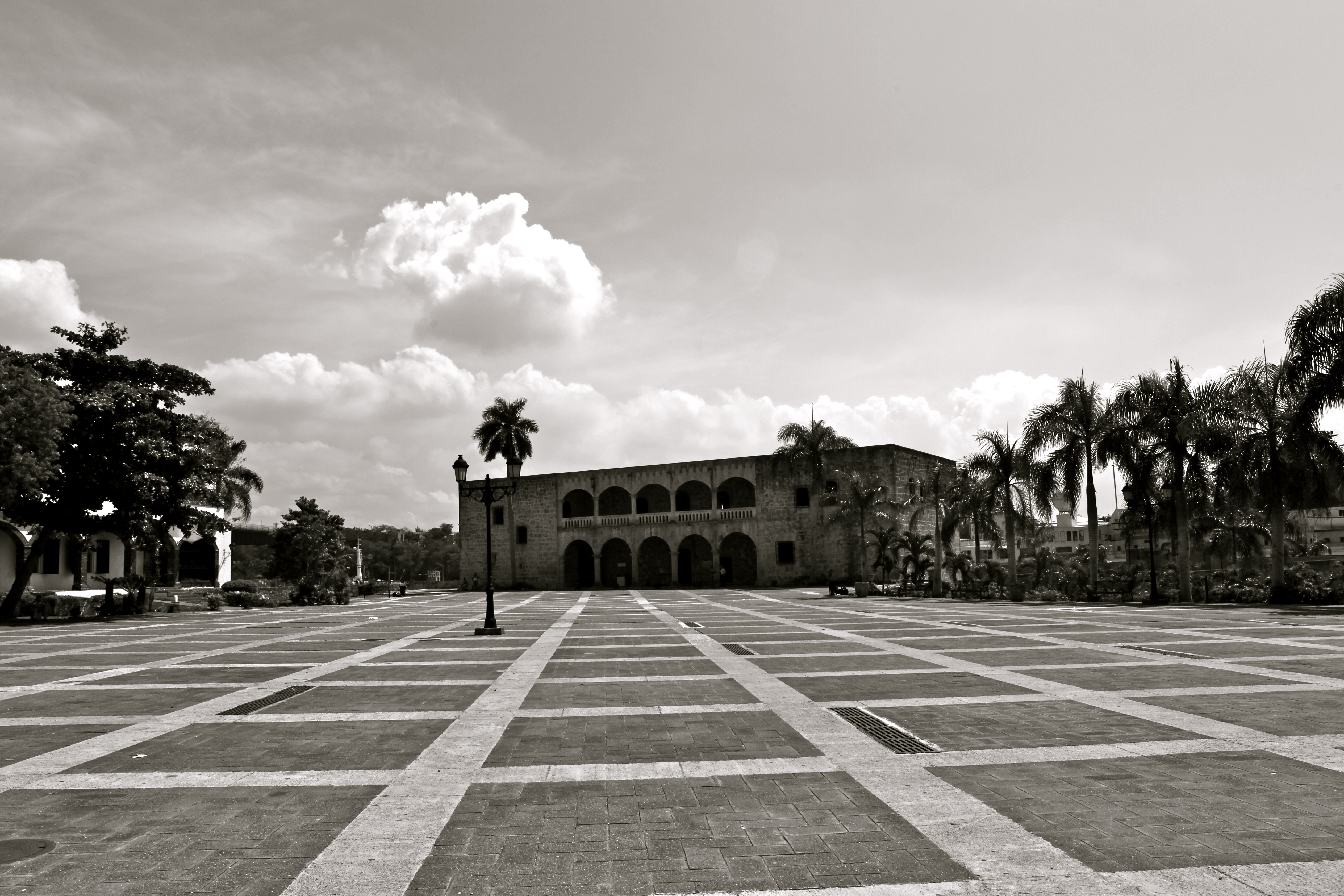
Foto: es una toma que hice de la famosa Plaza de España en Santo Domingo, con el Alcázar de Don Diego de Colón al fondo, el punto de partida de una de las principales arquitecturas del derecho internacional.
Harlin
mayo 7, 2013
Ese es el nombre de este hermoso niño, con quien nos cruzamos en una calle frente a la Catedral de Santo Domingo. Iba en los brazos de su madre, muy orgullosa; con su permiso, le hice esta foto. ¡Una vida buena para ti, Harlin!

Un año más se organiza el Coloquio de Derecho Internacional Humanitario en Soria (España). Ya van 18 años. No está nada mal. Felicidades a los directores, los Profesores José Antonio Pastor Ridruejo y Antonio Pastor Palomar, y a la Cruz Roja española en Soria. En esta ocasión el Coloquio se realiza los días 5 y 6 de julio y está dedicado a las «Fuentes de energía y conflictos armados». Aquí pueden ver el programa y los requisitos de inscripción. También pueden escribir al Profesor Antonio Pastor Palomar a antonio.pastor (@) urjc.es.
Excelencia académica en República Dominicana: Instituto Global de Altos Estudios en Ciencias Sociales
mayo 7, 2013

La semana pasada tuve la suerte de participar en una maestría de Relaciones internacionales en el Instituto Global de Altos Estudios en Ciencias Sociales de Santo Domingo (República Dominicana). El programa es estupendo, con estudiantes bien preparados y motivados con las mejores ambiciones. He quedado gratamente asombrado por la calidad académica de la dirección del IGlobal y la profesionalidad de su administración.
¡Gracias Fede!




 aquiescencia